
Storm Arcade Dash gives players quick rounds, simple inputs, and changing challenges in every session. At MEGAPERYA, members can access the title on supported desktop or mobile devices. This guide serves new and returning players through rules, controls, and practical round decisions.
How Storm Arcade Dash operates at MEGAPERYA today
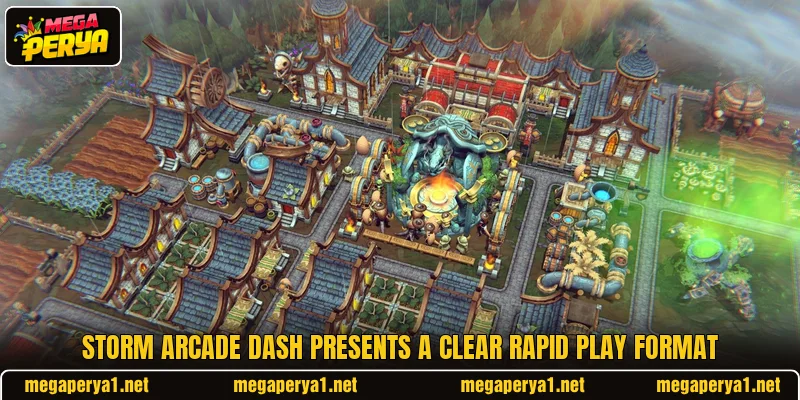
Storm Arcade Dash follows a compact format where players react to moving targets. Each round uses clear indicators, limited timing, and visible scoring information on screen. The pace increases gradually, while basic controls remain consistent throughout active play.
Players begin by selecting a stake in PHP or USD before launching play. Available amounts may vary, so members should review displayed limits before confirming play. Once started, the interface presents goals, remaining time, and current score in separate areas.
A finished round records results immediately, then offers another attempt using the main control. Storm Arcade Dash may include bonus stages when specific score conditions appear in play. These moments may add targets, multipliers, or shorter timed sequences with faster movement.
Core rules and round dynamics every player needs
Storm Arcade Dash rewards accurate timing because missed actions can reduce scoring opportunities quickly. Players should understand each symbol, stage objective, and control response before increasing their selected stake.
Choosing the opening stake
The stake selector appears before each round, allowing clear adjustments within displayed limits. Players can choose PHP values for local play or USD when supported. Every confirmed amount applies to that round, unless players change it afterward.
Lower starting amounts help members understand movement speed without causing confusion during early attempts. A modest choice also makes repeated practice easier while controls become familiar. Players should compare minimum and maximum values before pressing the final start button.
Stake changes should match the expected round pace and familiarity with each objective. Fast stages can demand several actions before players recognize scoring opportunities. A consistent opening amount keeps comparisons useful across attempts and changing patterns.
Reading targets and indicators
Targets usually appear with visual markers showing timing, value, or required action. Players should watch central areas first, because important prompts often appear there. Side indicators can show remaining seconds, current multipliers, and progress toward bonus conditions.
Different target types may require taps, clicks, holds, or directional movement during play. The interface normally separates these actions with shapes, icons, and short labels. Members can learn faster by matching each symbol with its expected control response.
In Storm Arcade Dash, valuable prompts may disappear sooner than common targets during busy stages. Players should prioritize clearly marked opportunities without ignoring the main round objective. Quick recognition improves scoring consistency when several elements appear at the same moment.
Starting Storm Arcade Dash correctly
Players should confirm their stake, connection stability, and control method before beginning. Mobile users need enough screen space, while desktop members should position the cursor centrally. These checks reduce missed inputs when the first targets appear without preparation.
The start button activates the timer, so players must focus before pressing it. Some rounds begin with slower movement, then introduce faster patterns after some actions. Early seconds provide useful information about direction, target frequency, and timing.
A clean opening often depends on reading prompts instead of tapping every visible object. Players should follow marked goals, because unrelated actions may produce no useful score. Careful first inputs establish a stable rhythm before speed increases.
View more: Lucky Arcade Run – Dash Through Colorful Arcade Challenges
Completing and evaluating rounds
A round ends when time expires, objectives finish, or the sequence concludes. The result panel then displays score, rewards, and completed bonus requirements. Players should review these figures before starting another attempt.
Repeated score changes can reveal which stages create the most missed opportunities. Members can compare accuracy, timing, and bonus activation across similar rounds. This review supports better choices when target patterns return.
Players should also check transaction records after unusual results or loading interruptions. Storm Arcade Dash records completed outcomes in account history when sessions close normally. Any mismatch should be documented with screenshots and visible round reference details.
Practical methods for cleaner and cleaner game decisions
Storm Arcade Dash becomes easier to read when players separate target priority from background movement. The methods below focus on control accuracy, pattern awareness, and efficient responses in short rounds.
Focus on primary objectives
Every stage presents a main objective that should guide each action from the beginning. Players need to identify required targets before reacting to optional symbols nearby. This focus prevents wasted inputs when several animated elements compete for attention.
Primary goals often use brighter markers, larger icons, or repeated placement across the screen. Members can track these signals while ignoring decorative movement without scoring value. Consistent attention supports cleaner timing when stages become faster.
Players should reassess the objective after bonuses begin, because required actions may change. A new prompt can replace earlier targets or introduce additional timing conditions. Reading that change quickly protects accumulated progress during remaining seconds.
Learn recurring recurring patterns
Many arcade rounds reuse directions, intervals, or target positions across stages. Players can observe these patterns without assuming every sequence will remain identical. Recognizing repeated movement creates more time for accurate responses during play.
In Storm Arcade Dash, some targets may enter from familiar edges before crossing the center. Members can prepare the cursor or thumb near likely paths without early taps. This positioning shortens reaction distance while preserving control over the next input.
Pattern learning works best through comparisons, because one round may contain deliberate variations. Players should notice timing differences instead of memorizing a single fixed sequence. Flexible recognition remains useful when speed, spacing, or value changes.
Use inputs with deliberate timing
Rapid tapping can create mistakes when the game requires specific actions or ordered actions. Players should press only after confirming the correct symbol and expected response. Controlled timing improves accuracy while reducing accidental inputs during crowded moments.
Mobile members can keep one thumb near the action area for faster movement. Desktop players may benefit from shorter cursor paths and a steady hand position. Both approaches reduce unnecessary motion when several targets appear within short periods.
Players should pause briefly between rounds to reset focus and review missed prompts. A short review helps identify whether errors came from speed, position, or misunderstanding. The next attempt can then use one clear adjustment instead of many changes.

View more Category: Arcade
Conclusion
Storm Arcade Dash offers direct arcade action through timed rounds, visible goals, and responsive controls. Members can access the game through MEGAPERYA after checking currency, device, and account settings. Download the app, register carefully, start with familiar controls, and good luck playing.